
Anatomy of an engaging STEAM classroom
Today’s jobs require employees who are collaborative, creative, flexible and have good communication skills. Our educators, tasked with preparing students for a rapidly evolving workforce, have found an effective approach in the STEAM curriculum.
Designing a STEAM (science, technology, engineering, arts and mathematics) learning space to support this approach requires consideration of various elements to create an environment that fosters creativity, collaboration and exploration. Some key building blocks in the design of a STEAM learning space include:
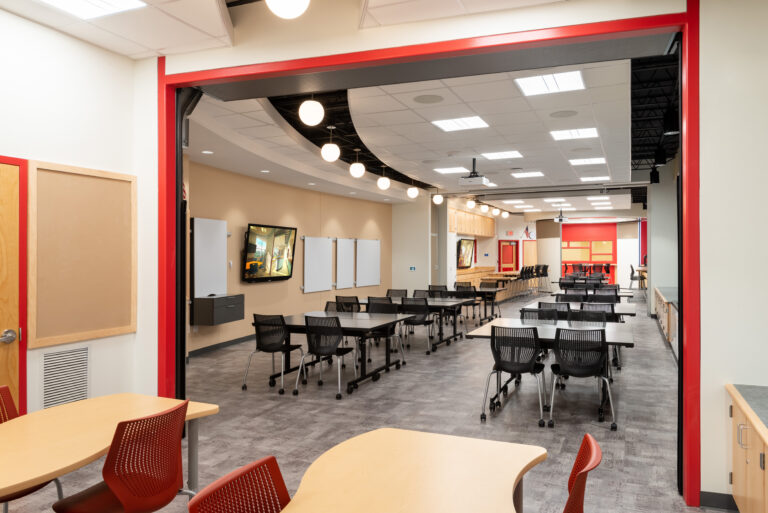
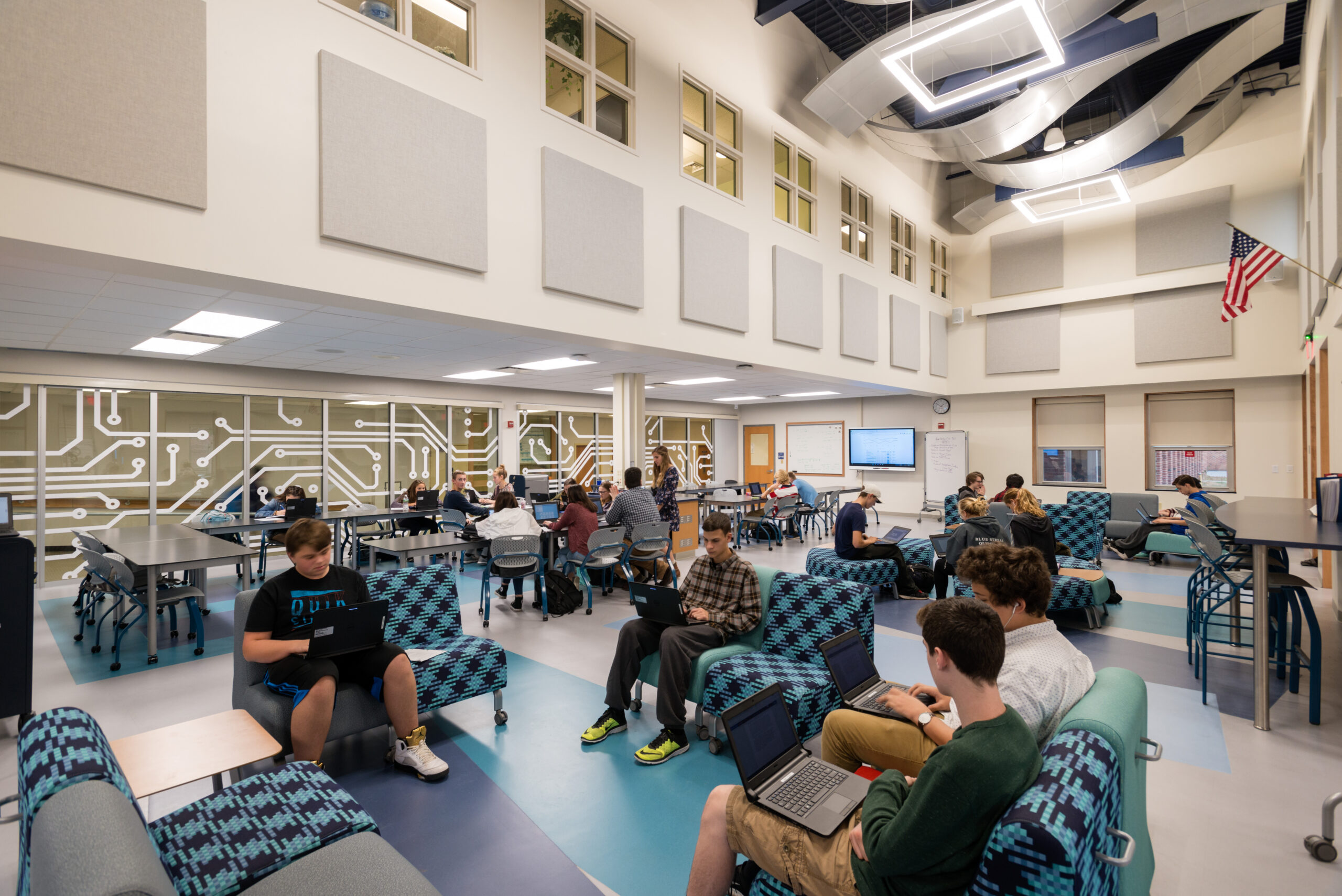
Flexibility and modularity: The learning space should be flexible and able to accommodate different teaching methods, activities and group sizes. Use movable furniture, partitions, and modular design elements that can be reconfigured easily to support various projects and learning styles. The Glens Falls City SD created a 21st Century Learning Commons at its high school that features air walls, a garage door and a circular whiteboard wall system to divide the space and a range of seating from counter to soft couch, to classroom.
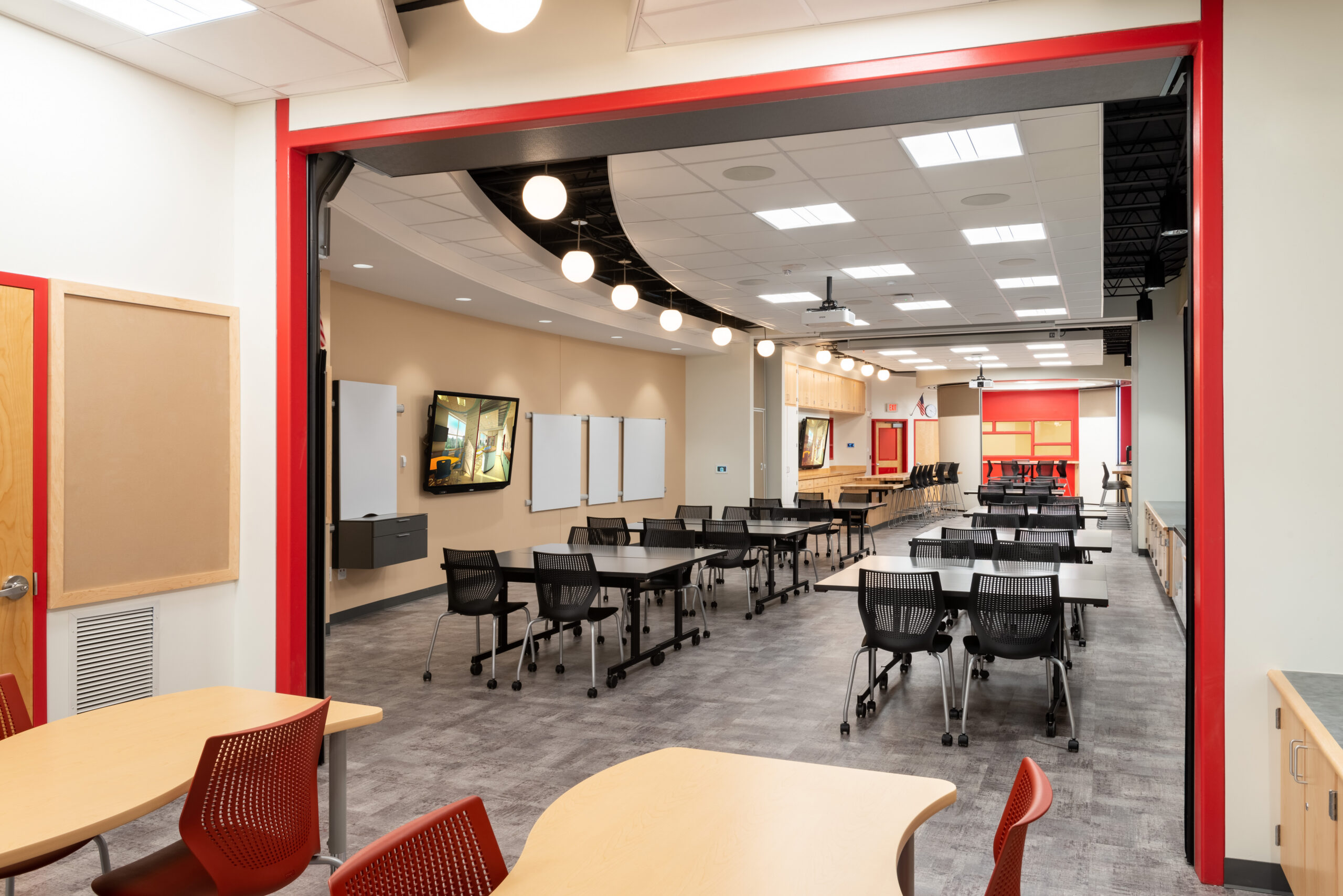
Zoning and layout: Divide the space into zones based on activities or disciplines. For example, create areas dedicated to robotics, coding, arts, experimentation and collaboration. Define clear pathways and create designated areas for storage, display, and presentation. When the Burnt Hills-Ballston Lake CSD added a STEAM Center to its high school it incorporated large, open and collaborative project-based labs centered around a shared technology classroom with breakout space. The labs include Materials Processing, CNC/Metals, Robotics and STEAM Fabrication.
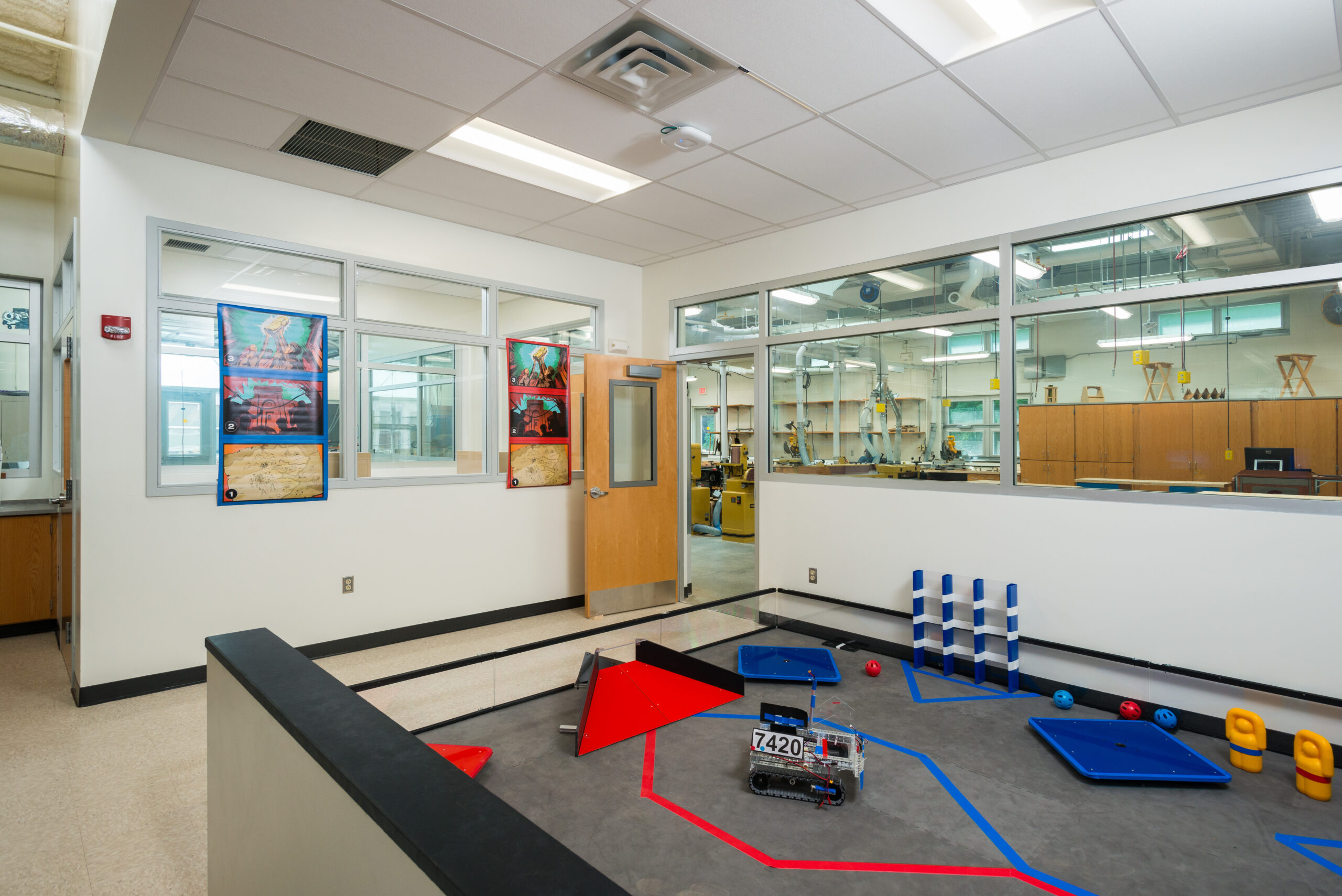
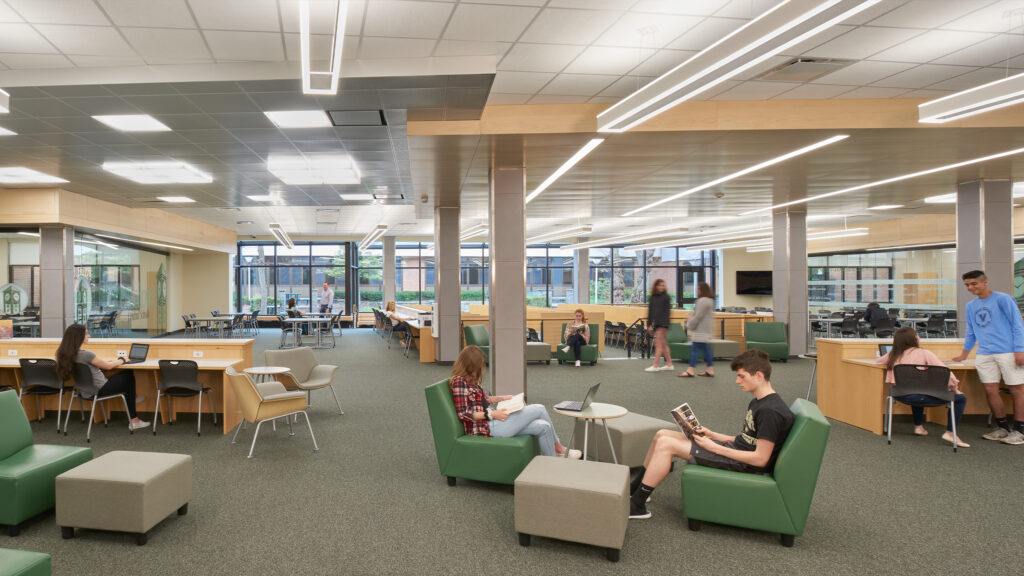
Collaboration and group work: Design the space to encourage collaboration and teamwork. Include large tables, comfortable seating arrangements and writable surfaces for brainstorming and collaborative work. Consider incorporating dedicated project areas where students can gather and work together on hands-on projects. The Saratoga Springs City SD created a project-based learning center at their high school that embraced this approach with a range of soft seating, individual workstations and large tables. Mobile furniture makes it easy to transform the space to suit the needs of each user.
Natural light and biophilic design: Incorporate ample natural light into the space as much as possible. It helps create a welcoming and stimulating environment. Integrate biophilic design elements such as indoor plants, living walls or natural materials to bring nature indoors and enhance student well-being and creativity. Light was infused throughout the Peekskill City SD High School STEAM Innovation Center by enlarging and adding windows (the previous windows were small and positioned so high only the sky could be seen when looking out), adding glass doors and incorporating glass partition walls.
Display and exhibition spaces: Designate areas to showcase student work and projects. Include display boards, exhibition walls or digital screens where students can share their achievements and findings with others. This promotes a sense of pride and encourages peer learning and inspiration. The Peekskill City SD STEAM Innovation Center also features student exhibit areas in every space, including magnetic walls, full walls covered in whiteboard material and glass display cases, beginning with a display case at the entrance.
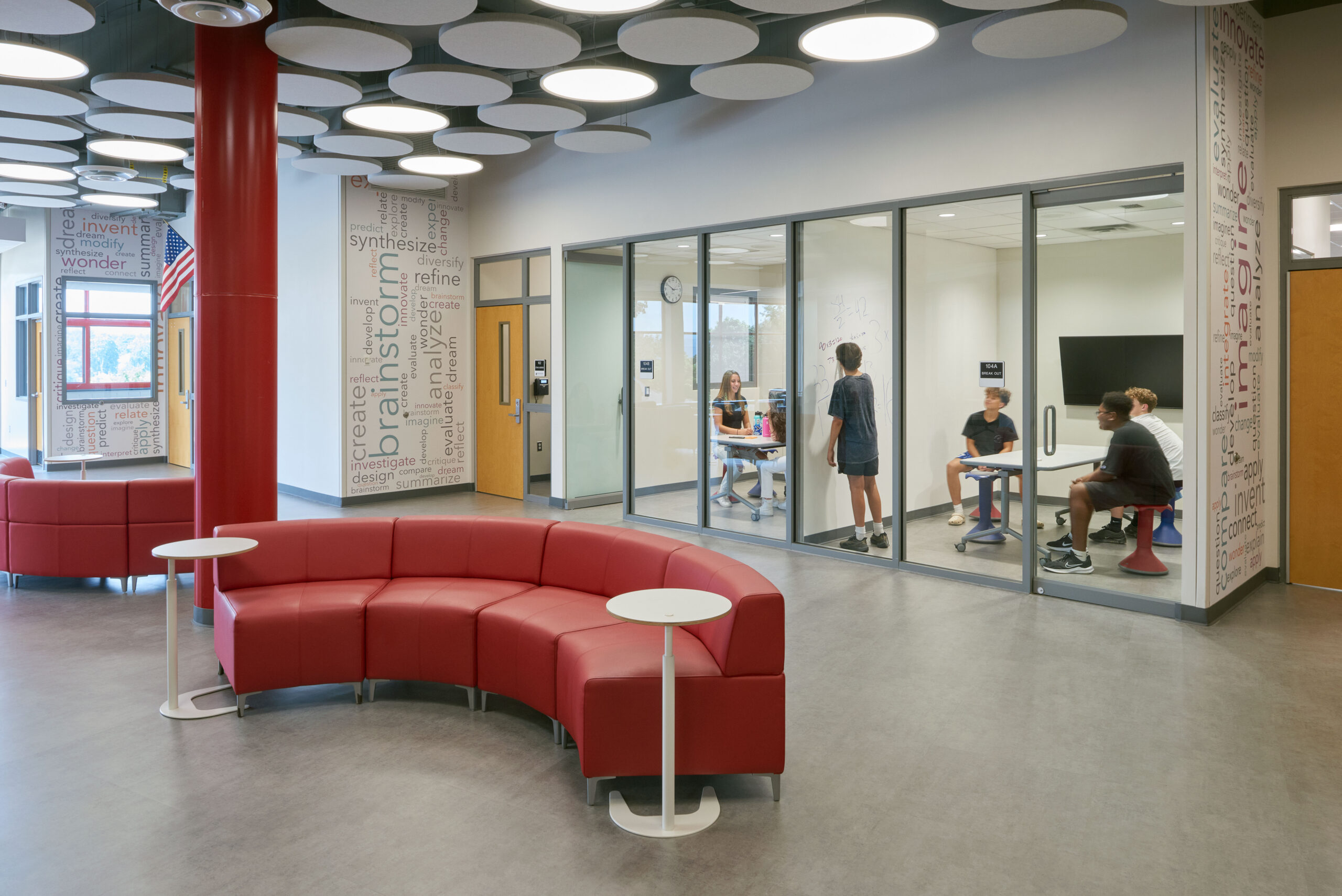
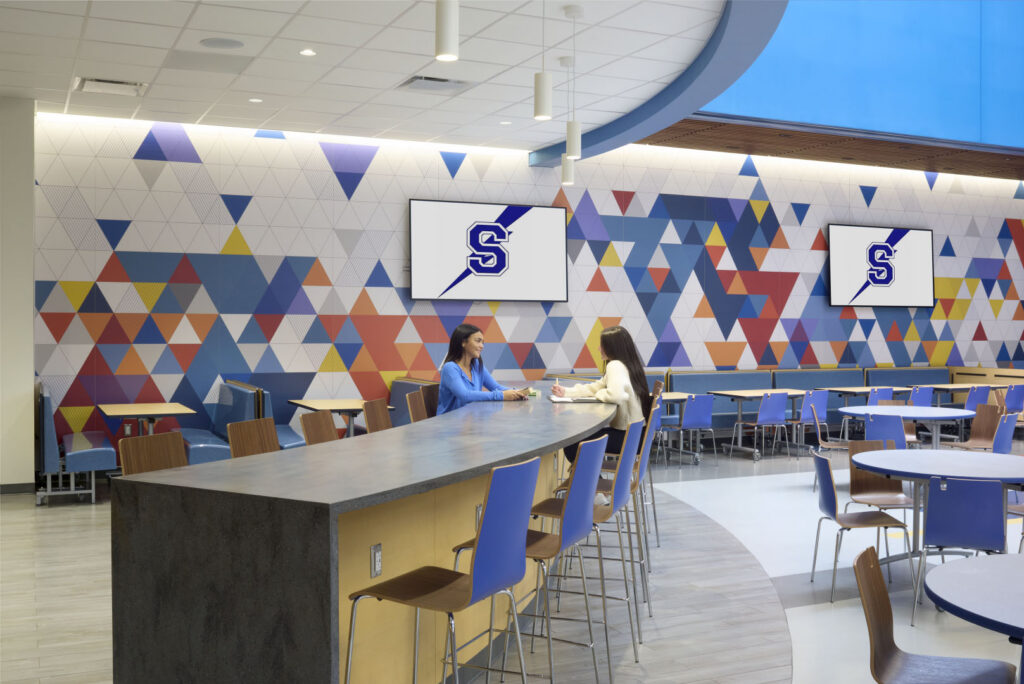
Inspirational and stimulating environment: Finally, design the space to inspire and stimulate students’ curiosity and creativity. Use bright colors, engaging artwork, inspirational quotes and interactive displays to create an environment that sparks imagination and motivates exploration.
STEAM education begins with educators, but learning environment planners and designers can be valuable partners by helping to create spaces that support the broad scope of the STEAM curriculum. This in turn enables STEAM educators to nurture critical thinking, creativity, collaboration and problem-solving skills, empowering their students to become lifelong learners and active contributors in an increasingly interconnected and rapidly changing global society.