
Reimagining the Learning Environment
Why is the learning environment changing?
We know that children learn in different ways and progress at different rates, yet most of our schools and classrooms are still set up for the ‘sage on the stage’ approach, which encourages the traditional lecture style of teaching and memorization.
This made sense when it became popular during the Industrial Revolution. Students were moved quickly through instruction so they could graduate and take jobs in factories. Collaboration and critical thinking were not seen as necessary skills for a productive citizen. In today’s fast-paced world, these critical skills are considered vital in any industry.
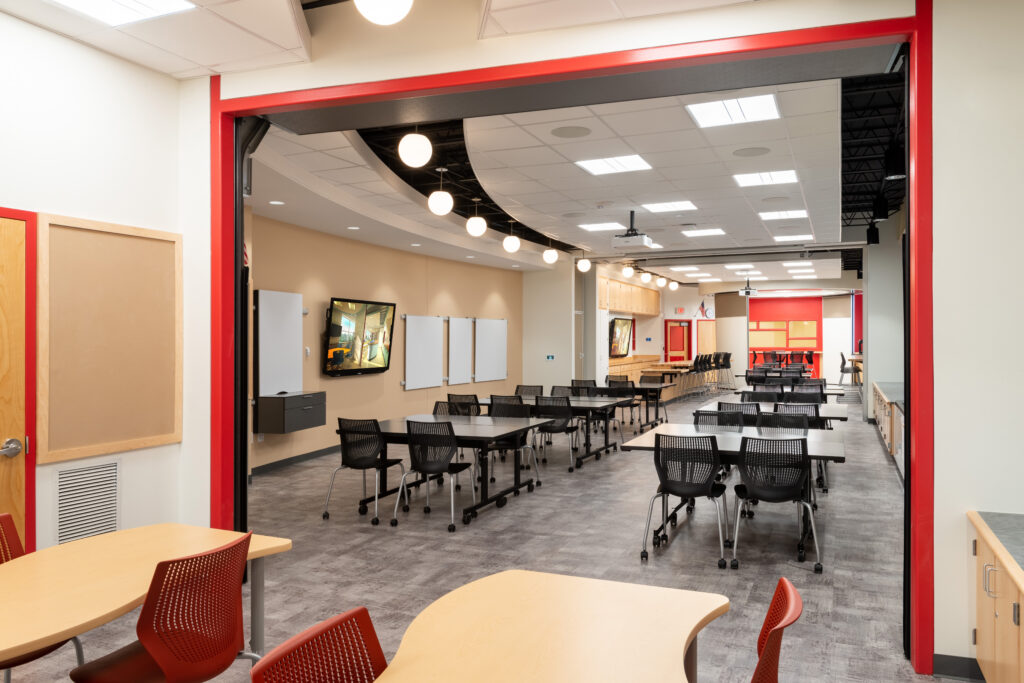
Mastery of essential 21st-century skills requires a variety of spaces and teaching methods. Flexible learning environments allow for multiple modes of teaching and learning. For example, project-based learning (PBL) requires additional space for hands-on activities, additional storage for materials, and flexible furniture to allow students to move from individual work to group activities. PBL may involve some traditional teaching, but more often teachers act as a facilitators of learning, active participants working with their students all around the learning environment.
How is the learning environment changing?
When designing learning environments, the ultimate goal is to create spaces that foster a love of learning. Such spaces should be student centered, accommodate a variety of learning styles, provide security, and promote inclusivity. Today’s school buildings and classrooms need to stand the test of time, while being flexible enough to evolve as the needs of society change.
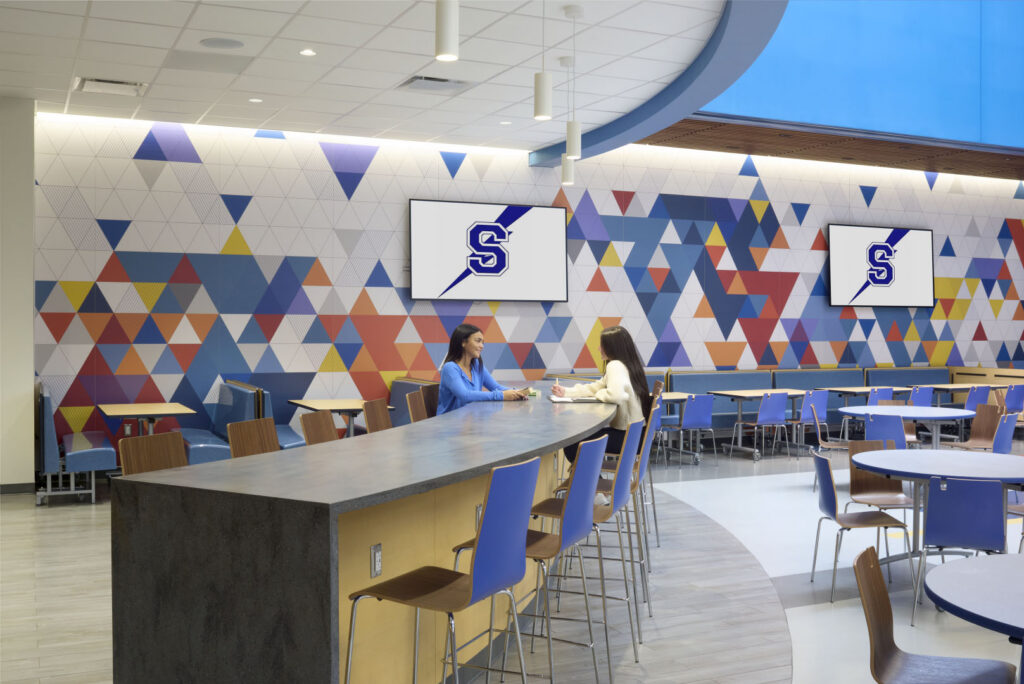
Effective learning environments offer a range of spaces that accommodate different activities and learning styles, promote collaboration, and provide a sense of student ownership and expression. For example, breakout spaces support small group instruction and collaborative work; presentation areas promote public speaking skills; and display areas throughout provide space to celebrate student accomplishments.
Effective learning environments must also provide for student well-being by incorporating support services and creating a healthy physical environment. Design elements like daylighting, indoor air quality, and acoustics are proven to have a major effect on a student’s: ability to learn, absenteeism, and attitude about school. Incorporating skylights and light control systems, operable windows, and HVAC systems with minimal sound reverberation can provide lasting physiological benefits for students.
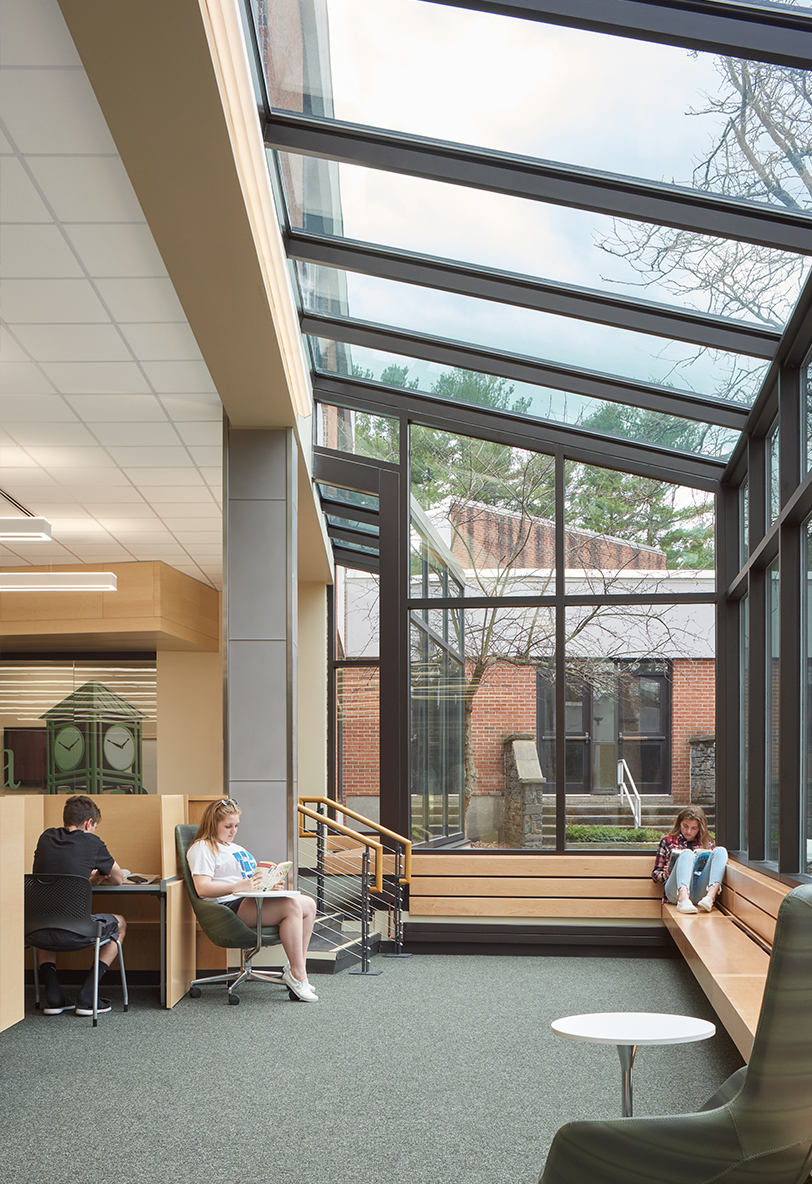
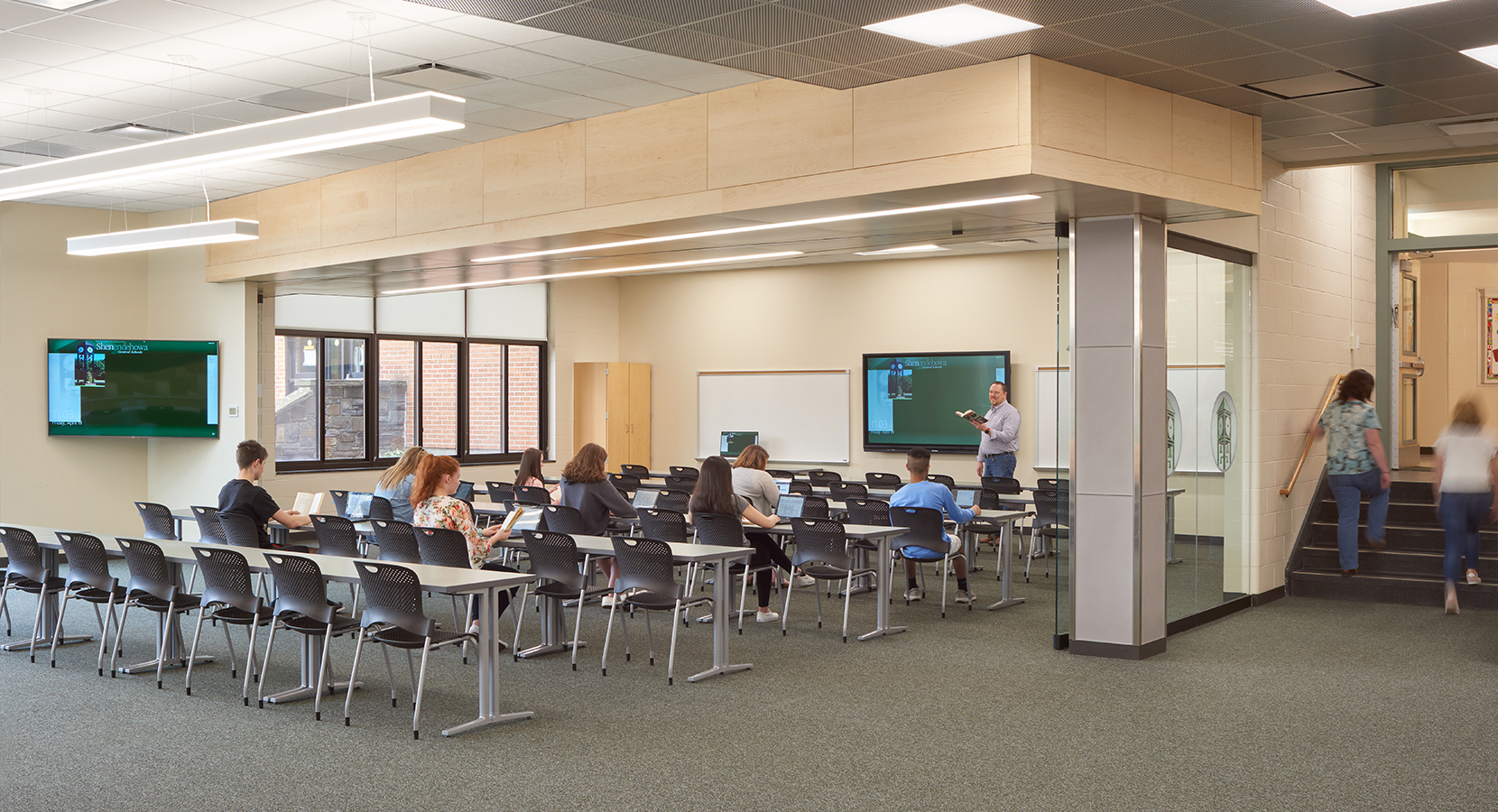
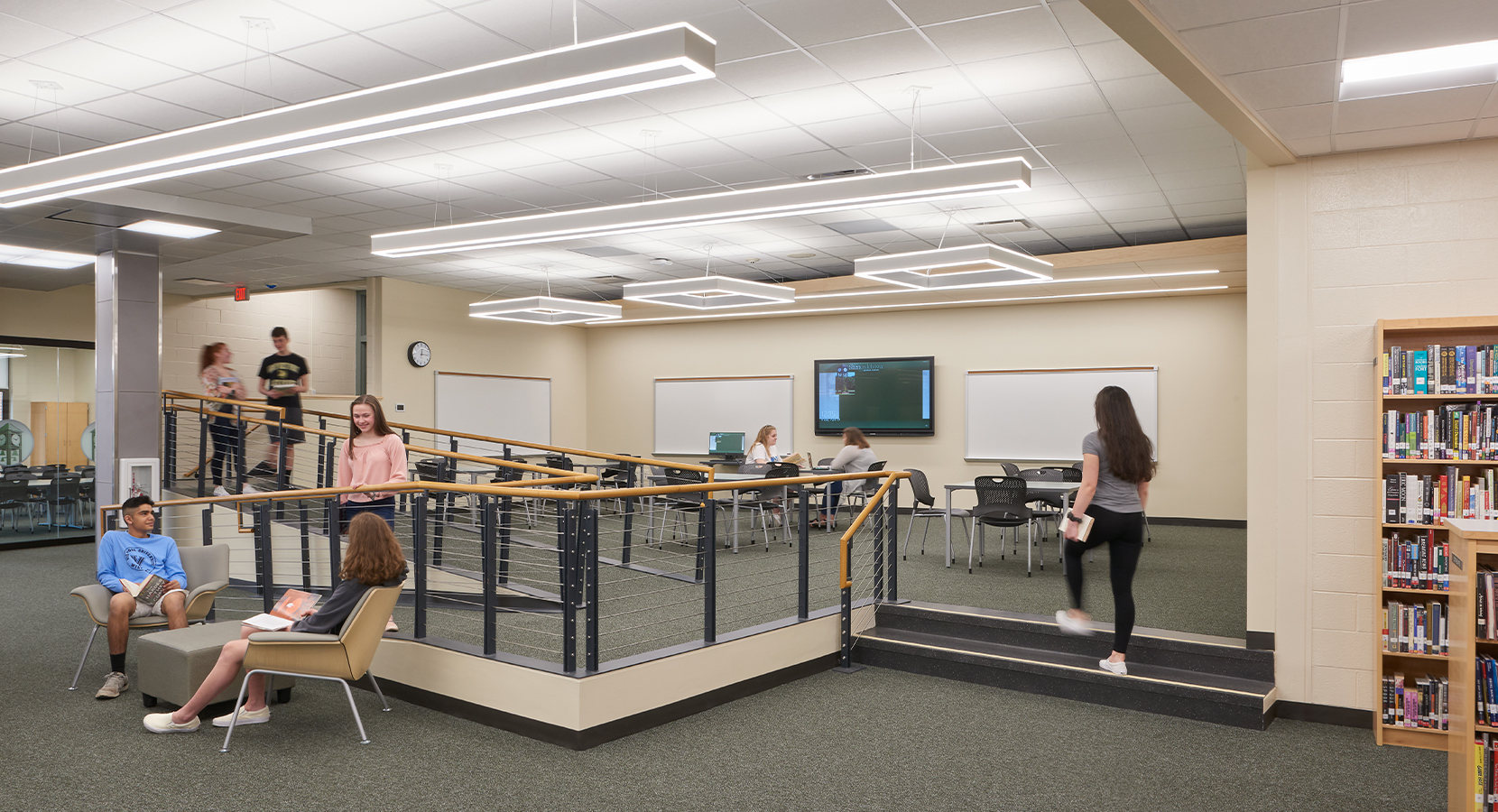
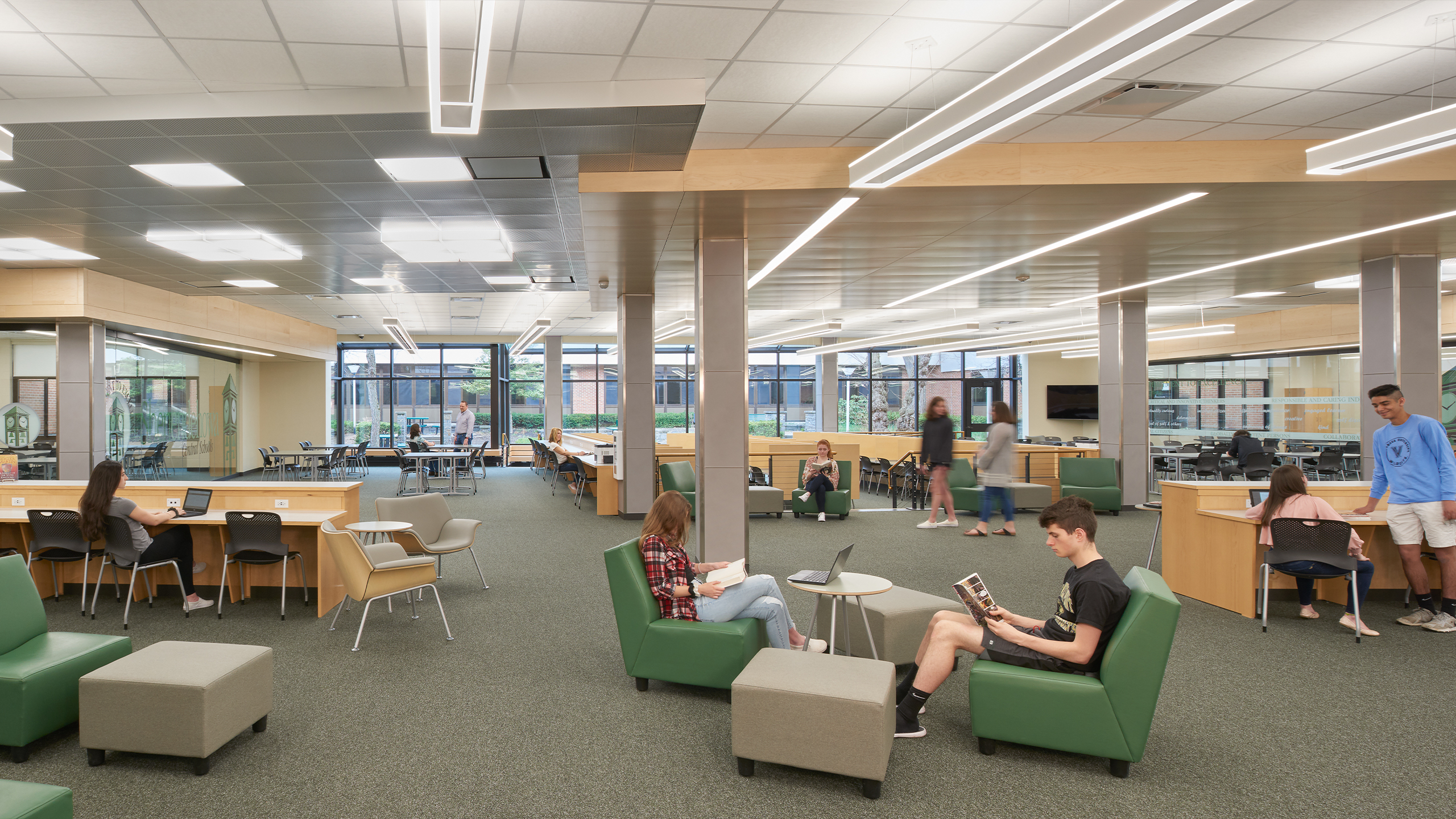
At the Shenedehowa High School East Library, multiple learning environments are provided. Open areas with flexible furniture support small-group activities and socialization, while carrels provide a place for quiet study. A variety of flexible learning spaces, created by changes in floor level and movable glass walls, accommodate various teaching, learning, and collaboration modes. The overall space can accommodate multiple classes, hundreds of students, or a large public event.
How has technology changed the learning environment?
Today’s digital natives skillfully leverage technology in most aspects of their daily lives. Incorporating technology into the learning environment is both essential to keeping them engaged and necessary to remain relevant. Although smart devices can make us less social, schools are using technology to promote collaboration. With cloud-based learning, students can read and write to documents from any device, allowing them to easily interact with their classmates and teachers and enabling real-time feedback and editing across the classroom or across the world.
Distance learning allows students to take classes that are not offered at their school, collaborate with students around the world, and form partnerships with entities outside their school building.
Because learning can now happen anywhere, it’s important to plan for a variety of media and spaces in your design. Dedicated computer and distance-learning labs provide an organized location for in-depth computing activities, while mobile devices allow for learning in the classroom, the library, the hallway, or even outdoors. Designs must provide for all of this with powerful Wi-Fi and data infrastructure, including: data closets and cabling, charging stations, additional power, and provisions for mounting large smartboards and screens.
Items such as flexible furniture and built-in seating should be considered as well. Now that students can take their learning anywhere, comfortable spaces provide an opportunity for a change of scenery. For some, the ability to relax while learning makes their school day less rigid and more enjoyable.
Where do we begin?
Creating great learning environments takes planning. The educational planning process often begins with a study of enrollment and demographics to determine the physical space needs of a district. But creating optimal learning environments involves much more than a calculated square-foot-per-student formula. A truly effective learning environment is the culmination of community vision and values; teaching and learning needs and methods; desired student experience; and so much more.
Undertaking a comprehensive learning environment planning process with an Accredited Learning Environment Planner (ALEP) is a great way to establish a shared vision to guide decision making about facilities and pedagogy. An ALEP can partner with your district to:
- Establish your goals and aspirations for education
- Create an action plan to achieve these goals, and
- Inform the design of environments that will support them.
To do this, an ALEP will engage the community and district stakeholders in developing an educational vision for their schools. They use that vision to develop educational specifications and long-range facilities master plans, which guide the design of learning environments, ensuring that they will facilitate your goals and aspirations.
The Association for Learning Environments, the accrediting authority for the ALEP designation, is a great resource for educational planning information. Their website, www.a4le.org, contains many informative presentations and webinars related to learning environments and their development.
Author
Callie Gaspary, AIA, ALEP is a principal at Mosaic Associates Architects. An expert in educational facility design, Callie’s has over 20 years of experience designing learning environments. An architect and accredited learning environment planner, Callie is an active member of the Association for Learning Environments.